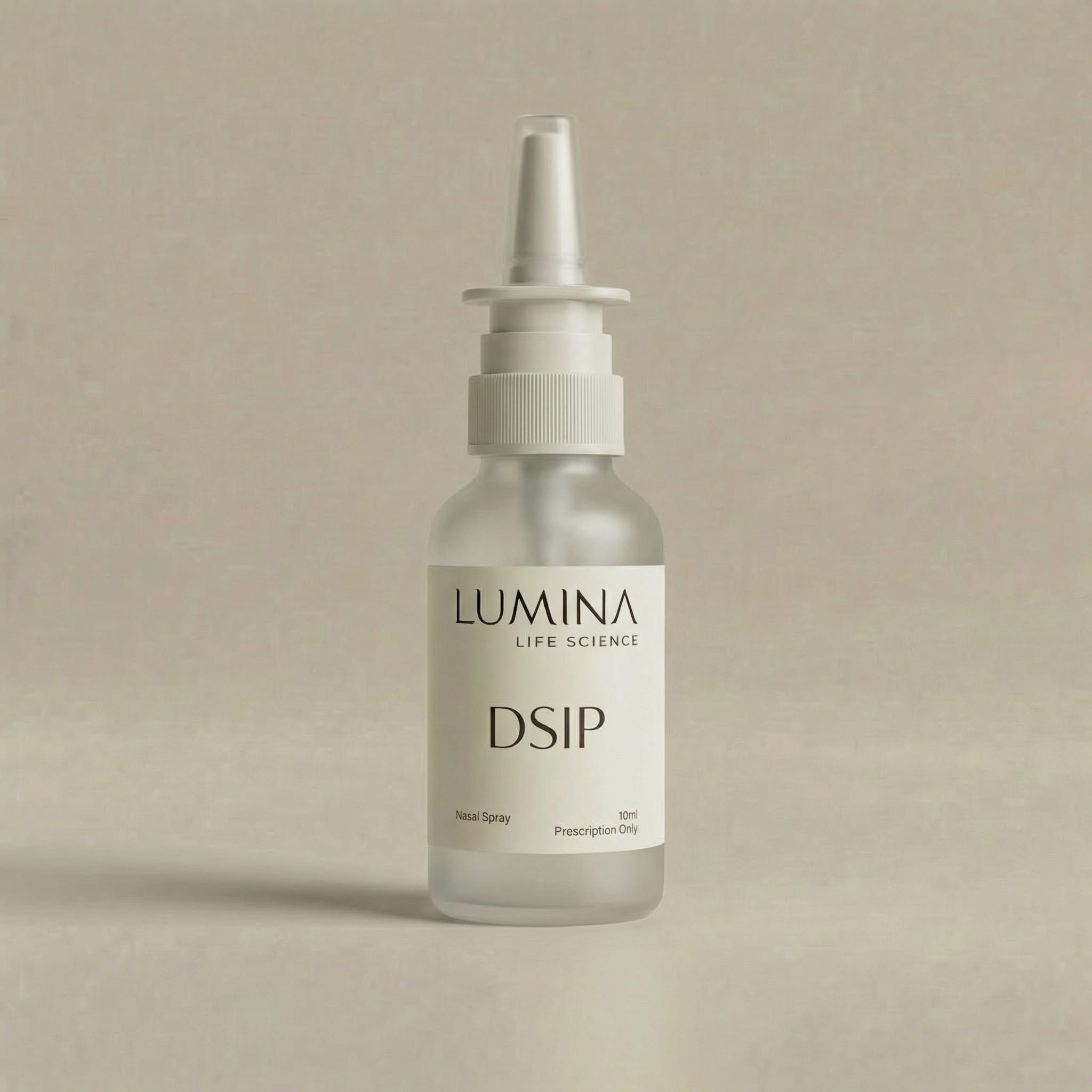
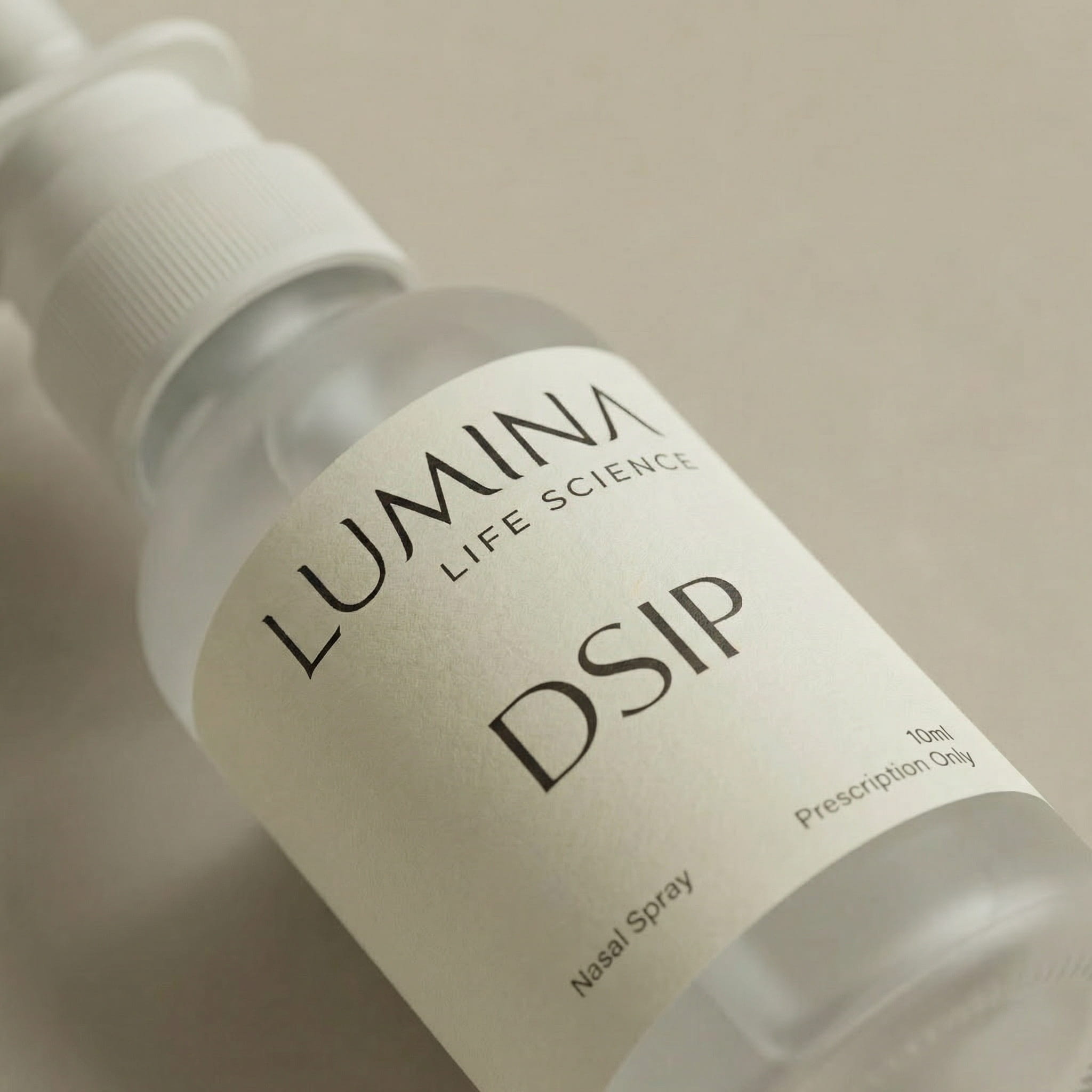
DSIP (Deep Sleep Inducing Peptide) is a small peptide designed to support the brain pathways involved in the stress response. It’s often used by people who struggle to “switch off” at night, wake frequently, or feel they never quite reach that deep, restful sleep that leaves them refreshed in the morning.
DSIP is thought to work at the level of the central nervous system, helping to restore parasympathetic tone - the “rest and digest” side of the nervous system. It also calms cortisol and the HPA axis - the ‘tired but wired’. By supporting this calming arm of the autonomic nervous system, DSIP may help the body and mind move more smoothly into deep sleep, rather than staying stuck in a wired, alert state.
This intranasal spray is designed for quick and convenient use as part of your evening wind-down routine.
DSIP is not an FDA-approved medication and is not intended to diagnose, treat, cure or prevent any disease. Your healthcare practitioner will advise whether DSIP is suitable for your situation.
When used as directed and alongside good sleep habits, clients commonly use DSIP to help support:
Deeper, more restorative sleep
Helping you reach the deeper stages of sleep associated with physical repair, hormone balance and waking feeling more refreshed.
Easier “switch-off” at night
Supporting the calming, parasympathetic side of the nervous system so the body can move out of “fight or flight” and into “rest and digest” mode before bed.
Reduced night-time waking
Some people find they experience fewer night-time awakenings and a more continuous sleep pattern when using DSIP as part of a structured routine.
Next-day energy, focus & mood
Better-quality sleep is closely linked with steadier energy, clearer thinking and a more stable mood during the day. DSIP is used to support these outcomes by working on sleep quality, not just sleep length.
Complementary support for high-stress lifestyles
For those who are training hard, working long hours or under mental/emotional stress, DSIP can be used as one pillar in a broader plan that includes sleep hygiene, nervous-system regulation, nutrition and movement.
*Individual results vary. DSIP works best as part of a complete program created with your healthcare provider and is not a replacement for healthy sleep habits or medical care.
| AU Made | Vegan Friendly | Gluten Free | Corn Free |
| Y | Y | Y | Y |
| Dairy Free | Soy Free | Shellfish Free | No Egg Products |
| Y | Y | Y | Y |
| Ingredient name | Description |
|---|
| DSIP (Deep Sleep Inducing Peptide) | 1 mg/mL |
Active Ingredient
DSIP (Deep Sleep Inducing Peptide) 1 mg/mL
Presentation
Intranasal spray, 10 mL bottle
Approx. 100 mcg per spray
Protocol & Standard Dosing
Standard Dose
1 spray into each nostril (total ≈ 200 mcg)
Taken 15–30 minutes before bed
How to Use
Use as part of your evening wind-down routine, for example:
- After brushing teeth
- After turning off screens and dimming lights
- As the final step before getting into bed
- Gently blow your nose first if needed.
- Shake the bottle if directed, then spray once into each nostril, aiming slightly outwards and back.
Timing & Frequency
Once nightly, 15–30 minutes before bed, 5 days per week.
Best used after your evening wind-down routine and away from food or drinks other than a small sip of water if required.
Course Length
Commonly used over 4–8 weeks while sleep routines, stress management and other supports are also being addressed, with ongoing use adjusted by your prescriber based on response and tolerance.
Dose Adjustments
Any change in dose or frequency should be made only under guidance of your healthcare provider, based on how you sleep, how you feel during the day, and any side-effects.
Side Effects, Reactions & Medical Contraindications
Contraindications – Use is generally not recommended in:
- Known allergy to DSIP or any component of the nasal spray
- Pregnancy or breastfeeding (insufficient safety data)
- Significant neurological, psychiatric or respiratory conditions unless under specialist supervision
- Concurrent use of strong sedative or CNS-acting medications (sleeping tablets, sedatives, some antidepressants, antipsychotics) without medical guidance
- Any person advised by their healthcare provider to avoid CNS-active sleep agents
- Common Side Effects and Adverse Reactions
- ND – DSIP is not a sedative.
Often mild and transient where they occur:
- Nasal irritation: burning, tingling, dryness, runny nose, congestion or sneezing
- Mild headache or light-headedness
- Changes in sleep pattern: vivid dreams, deeper sleep than usual, or mild grogginess on waking (especially in the first weeks)
- Mild mood or energy shifts as sleep quality changes
Reactions Requiring Medical Attention
Stop using DSIP and contact a healthcare provider (or emergency services if severe) if experiencing:
- Signs of a serious allergic reaction: widespread rash, hives, facial or tongue swelling, difficulty breathing
- Severe or persistent headache, confusion, disorientation or unusual behaviour
- New or worsening anxiety, agitation, depressed mood or suicidal thoughts
- Persistent nosebleeds, severe sinus pain/pressure, or thick discoloured nasal discharge with fever
- Any new or worsening symptom that feels serious or concerning
Safety Note:
Long‑term data is limited. Use should always be monitored by a qualified clinician, with regular reviews and ongoing medical supervision. Informed consent is essential.



 Weight & Metabolism